
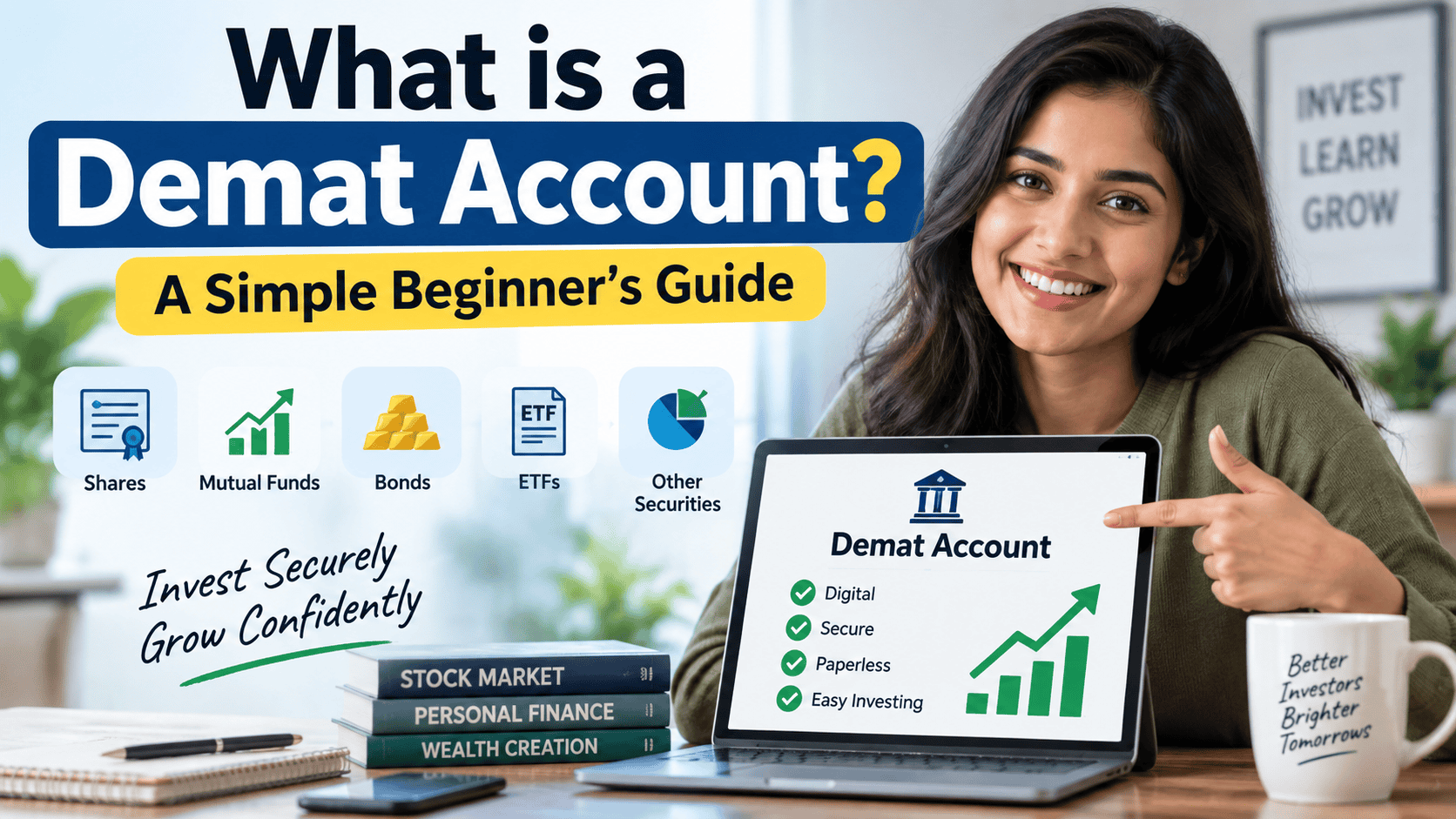
What is a Demat Account? A Simple Beginner’s Guide
If you’ve thought about investing in the stock market, you’ve almost certainly come across the term “demat account.” It’s the first thing you need before you can buy a single share — yet for most beginners, it’s never really explained. This guide breaks it down in plain language: what a demat account is, how it works, how it differs from a trading account, and how to open one in India.
What a Demat Account Actually Is
“Demat” is short for dematerialised. A demat account holds your shares and other securities in electronic form, instead of as physical paper certificates.
Years ago, when you bought shares, you received a physical certificate as proof of ownership — which could be lost, damaged, forged, or take weeks to transfer. A demat account replaced all of that. Today, when you buy shares, they are simply credited to your demat account digitally, much like money sits in a bank account. When you sell, they are debited from it.
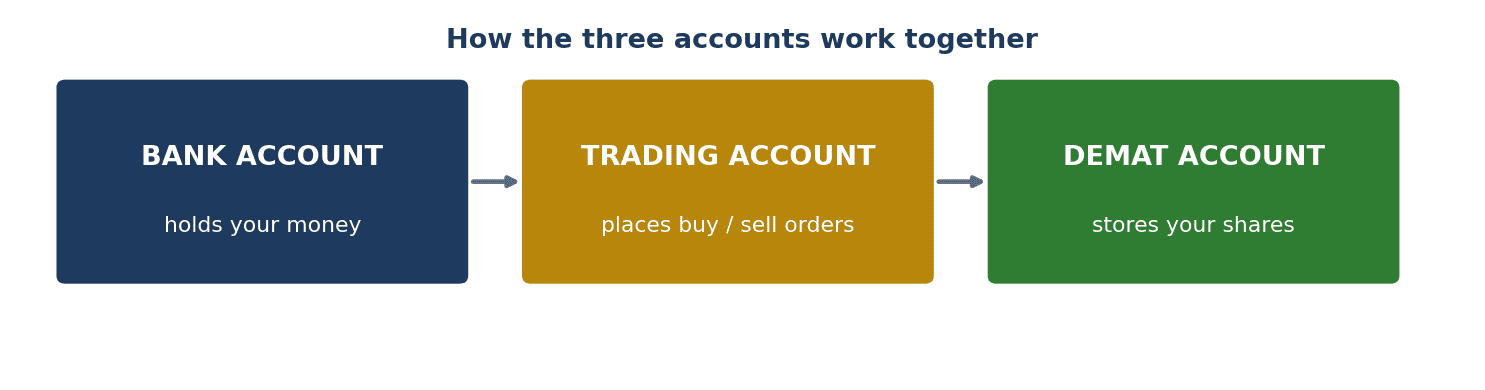
In short: a bank account holds your money; a demat account holds your investments.
What You Can Hold in a Demat Account
- Equity shares of listed companies
- Mutual fund units
- Bonds and debentures
- Exchange-traded funds (ETFs)
- Government securities
This makes it a single, consolidated home for your market investments.
Demat Account vs Trading Account — the Difference
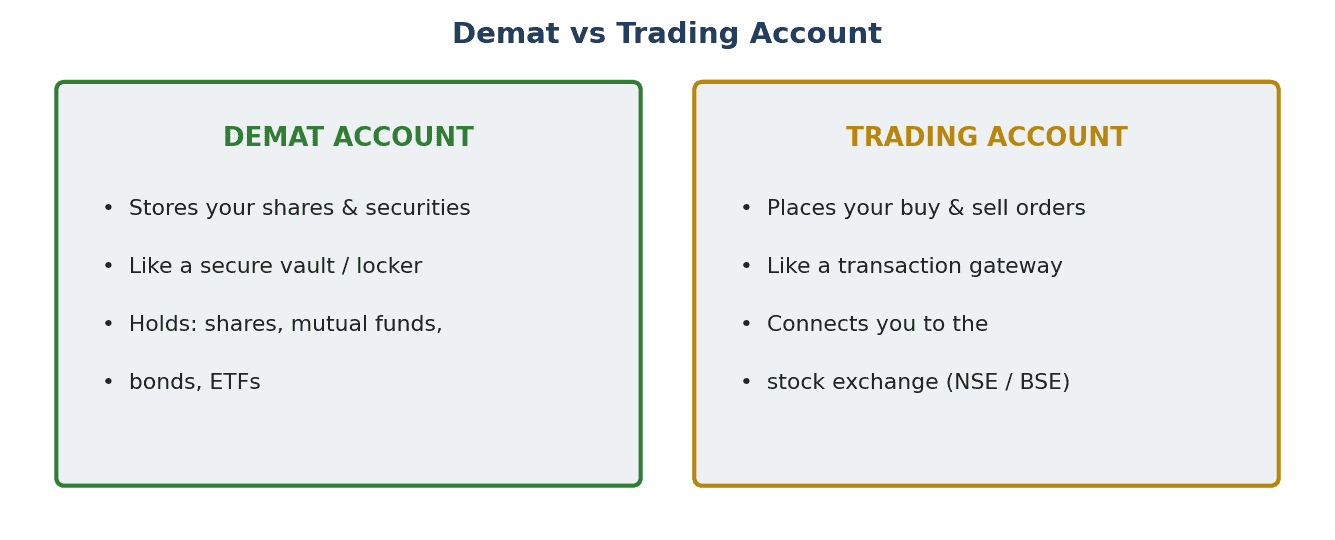
This is the point that confuses most beginners, because you need both, and they work together but do different jobs:
- A trading account is what you use to place buy and sell orders on the stock exchange. Think of it as the transaction gateway.
- A demat account is where the shares you buy are stored afterwards, and from where shares you sell are taken.
A simple way to picture it: when you buy a stock, the order goes through your trading account, the money comes from your bank account, and the shares land in your demat account. All three are linked and work as one system.
When you open an account with a broker like TechTrade, the demat and trading accounts are typically set up together during onboarding, so you don’t have to arrange them separately.
Why You Need a Demat Account
A demat account is mandatory to invest in listed shares in India, but beyond being a requirement, it offers real advantages:
Safety. Your holdings are stored electronically with the depository in your own name — no risk of lost, stolen, or forged certificates.
Convenience. Everything sits in one place. You can view your holdings, track their value, and receive corporate benefits like dividends and bonus shares automatically.
Speed. Buying and selling settles quickly and digitally, with no paperwork to post or process.
Access to more than shares. The same account lets you hold mutual funds, bonds, ETFs and more — and apply for IPOs, where allotted shares are credited straight to your demat account.
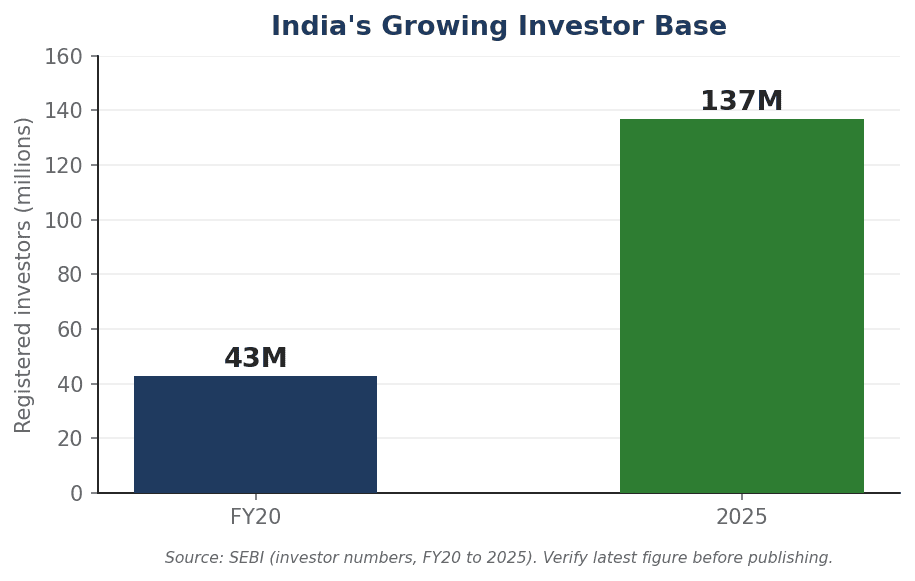
You’d also be joining a fast-growing base of investors. India’s registered investor numbers have climbed sharply in recent years as more people begin investing digitally.
What Does It Cost?
How to Open a Demat Account in India
Opening a demat account today is fully online and paperless. You’ll generally need:
- PAN card
- Aadhaar (for identity and address, linked to your mobile number)
- A bank account in your name
- A cancelled cheque or bank statement, and a photograph/signature
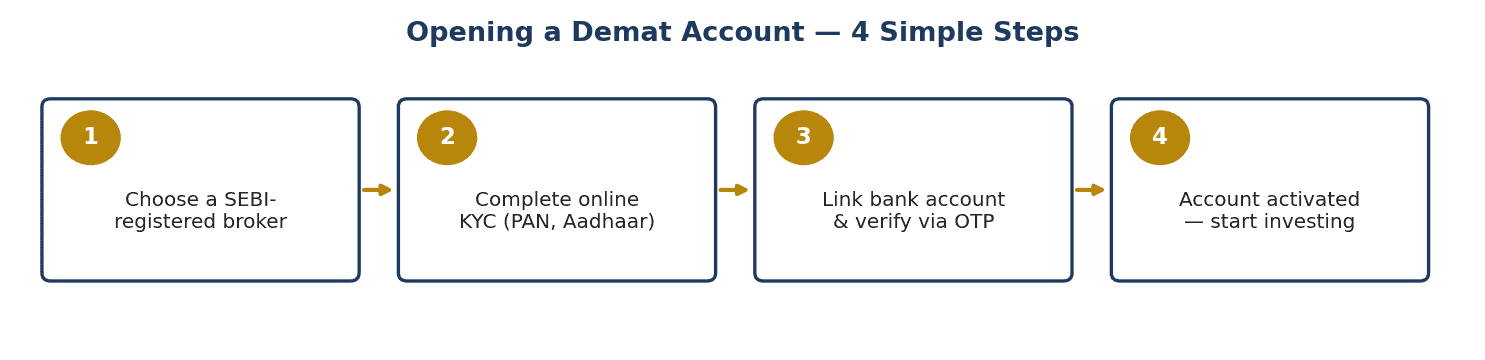
The process is straightforward: choose a SEBI-registered broker, complete the online KYC (identity and address verification), link your bank account, and verify using the OTP sent to your Aadhaar-linked mobile. Once verified, your demat and trading accounts are activated — usually within a day.
You can open a demat account with TechTrade online in a few minutes.
A Few Things to Keep in Mind
- Keep your login details secure and never share OTPs — your demat account holds real assets.
- Note the annual maintenance charge so you’re not surprised by it.
- If you won’t use the account for a while, you can keep it as a Basic Services Demat Account (BSDA), which has lower or nil maintenance charges for small holdings.
- A demat account only holds investments — the decisions about what to buy or sell, and their risks, remain yours.
The Bottom Line
A demat account is simply the secure, electronic home for your investments — the essential first step to participating in the stock market in India. Paired with a trading account and your bank account, it lets you buy, hold and sell shares and other securities easily and safely. Once you understand that, the rest of investing becomes far less intimidating.
Ready to begin? Open your demat account online with TechTrade, a SEBI-registered stock broker.
Disclaimer: Disclaimer: The securities and strategies discussed are for illustration and educational purposes only and are not recommendatory in nature. Investments in the securities market are subject to market risks. Read all related documents carefully before investing. TechTrade provides market insights and strategy-based tools which do not guarantee returns or performance. This content should not be considered as investment advice. Users are solely responsible for their investment decisions.For detailed disclosures and disclaimers, visit: www.techtrade.in | Compliance Officer: Madan Lal Kumawat – Email ID: compliance@techtrade.in, Mobile: +91-7300006530
Registration details (footer):
Sanchit Financial & Management Services Limited
SEBI No. – INZ000295835 | NSDL DP ID – IN303253
Corporate Member: NSE – 08039 | BSE – 6929 | MCX – 57415