
TechTrade Desk
Indian Stock Market Crash: Why Are Sensex and Nifty Falling?
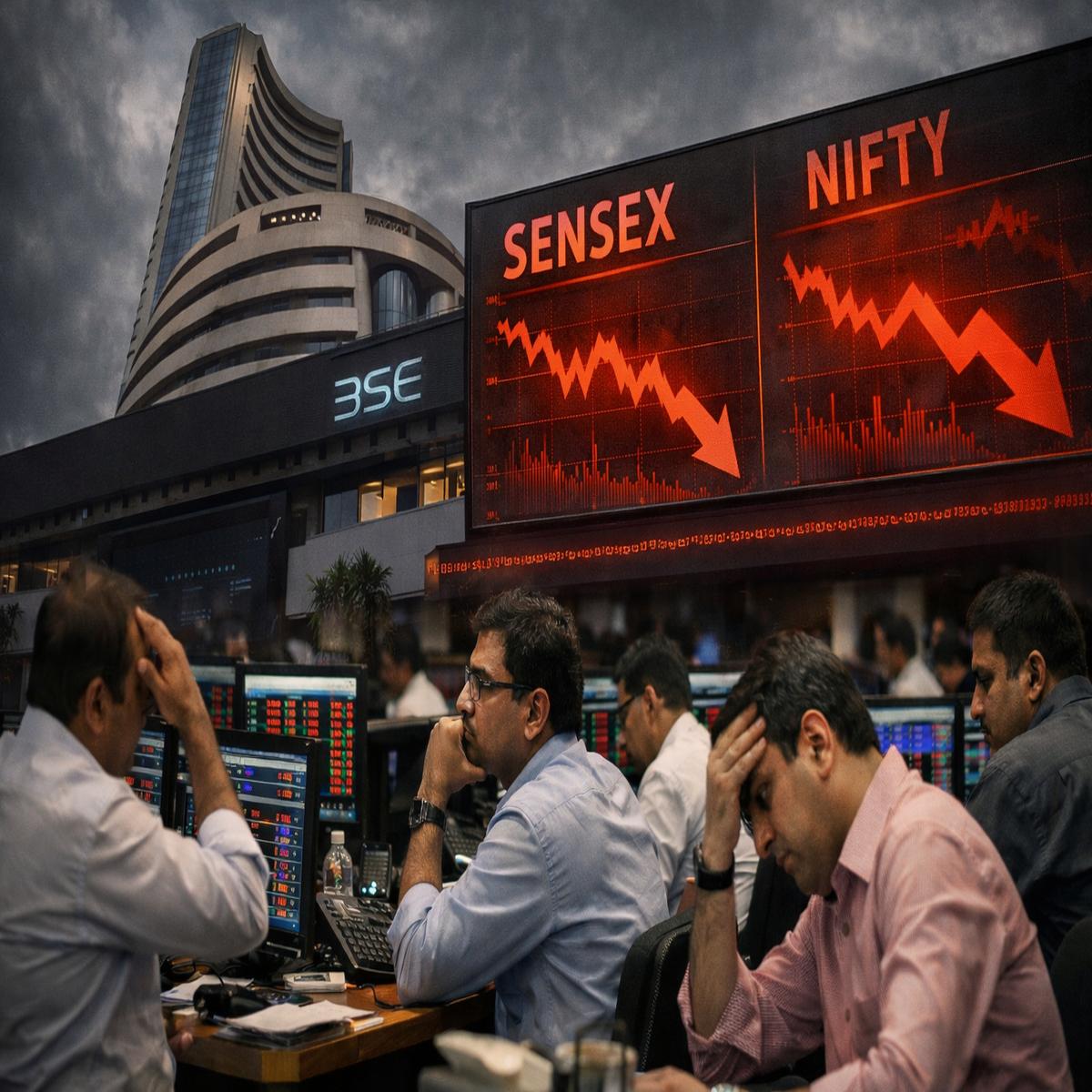
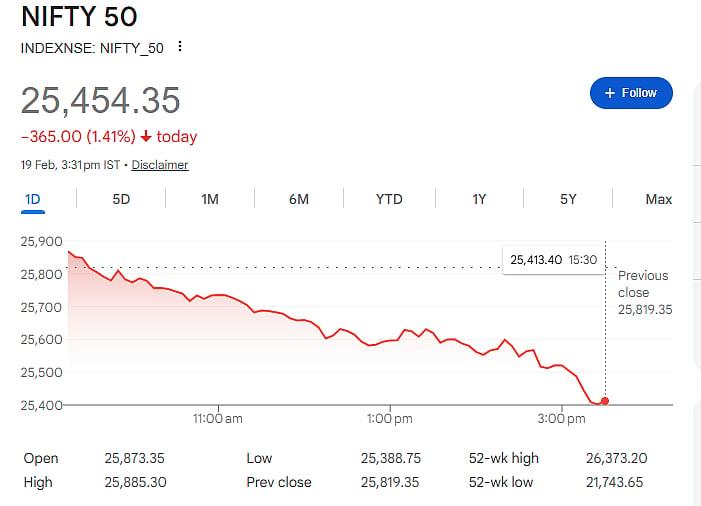
Indian Stock Market Today: Key Numbers
| Index | September 29 Close | Change |
|---|---|---|
| Sensex | 72,529.07 | -242.65 (-0.33%) |
| Nifty 50 | 22,716.20 | -64.05 (-0.28%) |
| Nifty Intraday Low | 22,569.65 | High Volatility |

Why Is the Indian Share Market Falling?
The combination of higher crude oil prices, geopolitical uncertainty, elevated global bond yields and foreign portfolio outflows has created a challenging environment for equities.
Rising Crude Oil Prices
India imports a significant portion of its crude oil requirements. Consequently, a sustained rise in international oil prices can influence the country’s import bill, inflation expectations and currency movements.
Why does expensive crude matter?
Higher crude prices can increase costs for businesses that depend heavily on fuel and petroleum-based inputs.
-
- Aviation
- Transport
- Logistics
- Paints
- Chemicals
- Tyres
- Manufacturing
Middle East Geopolitical Uncertainty
Investors closely monitor geopolitical developments because disruptions involving major energy-producing regions can influence crude oil supply expectations and global inflation.
Market chain reaction:
Geopolitical uncertainty → Higher oil prices → Inflation concerns → Higher bond yields → Pressure on equity valuations
Rising US Treasury Yields
When US government bond yields rise, investors may reassess allocations between US fixed-income securities and emerging market equities.
Higher global borrowing costs can also affect valuations, particularly for companies whose valuations depend heavily on future earnings growth.
Foreign Investor Selling
Large institutional flows can increase selling pressure when global investors reduce their exposure to emerging markets.
Banking and Financial Stocks Under Pressure
Another important signal during a sell-off is market breadth. This measures how many stocks are advancing compared with the number of stocks declining.
Positive breadth
More stocks rising than falling generally indicates broader participation in an upward move.
Negative breadth
When significantly more stocks decline than advance, it indicates that selling pressure is widespread.
India VIX and Higher Volatility
A rising VIX indicates that market participants are pricing in greater uncertainty and potential price fluctuations.
Is This a Stock Market Crash or a Market Correction?
A single sharp decline does not by itself establish a long-term bear market.
The current market environment is characterized by elevated volatility, global uncertainty, crude oil concerns, foreign selling and weak market breadth.
What Should Investors Watch Now?
1. Crude Oil Prices
A sustained rise in crude prices could keep inflation and corporate-margin concerns in focus.
2. US Treasury Yields
Changes in US bond yields can influence global capital flows and equity valuations.
3. Foreign Institutional Flows
Investors can monitor whether foreign portfolio flows remain negative or begin to stabilize.
4. India VIX
Changes in volatility expectations can provide additional context during periods of market stress.
5. Rupee Movement
Currency movements are particularly relevant when crude oil and other commodities become more expensive.
6. Corporate Earnings
Over the longer term, company earnings and business fundamentals remain important factors in equity valuations.
What Should Investors Do During a Market Fall?
A falling market can create emotional pressure, particularly when portfolio values decline rapidly.
Instead of reacting solely to a single trading session, investors can review their investment horizon, portfolio diversification, individual holdings and overall risk exposure.
-
- Review your investment horizon.
- Check portfolio diversification.
- Review individual company fundamentals.
- Understand your risk tolerance.
- Avoid unnecessary leverage.
- Review your asset allocation.
- Understand the risks of derivatives before trading.
Trading During Volatile Markets
Technology can help traders monitor live prices, charts, indicators, positions, orders and portfolio exposure.
For active traders: Risk management, position sizing and understanding leverage are particularly important during periods of elevated volatility.
Why is the Indian stock market falling today?
Why does crude oil affect Indian stocks?
Why are US bond yields important for Indian investors?
Should investors panic when Sensex and Nifty fall?
Is this a good time to invest?
Don’t Have a Demat Account?
Conclusion
Rising crude oil prices, geopolitical uncertainty, elevated US bond yields, foreign investor activity and weak market breadth have all contributed to a difficult environment for Indian equities.
The September 29 session also demonstrated why investors should distinguish between intraday volatility and the final market close. The Nifty experienced significant intraday pressure before recovering much of its loss by the end of the session.
For investors, understanding why markets move, how risk affects a portfolio and whether an investment strategy matches individual objectives is more important than reacting emotionally to a single day’s movement.
Disclaimer: Disclaimer: The securities and strategies discussed are for illustration and educational purposes only and are not recommendatory in nature. Investments in the securities market are subject to market risks. Read all related documents carefully before investing. TechTrade provides market insights and strategy-based tools which do not guarantee returns or performance. This content should not be considered as investment advice. Users are solely responsible for their investment decisions.For detailed disclosures and disclaimers, visit: www.techtrade.in | Compliance Officer: Madan Lal Kumawat – Email ID: compliance@techtrade.in, Mobile: +91-7300006530
Registration details (footer):
Sanchit Financial & Management Services Limited
SEBI No. – INZ000295835 | NSDL DP ID – IN303253
Corporate Member: NSE – 08039 | BSE – 6929 | MCX – 57415