

SIP vs Lump Sum: Which Should You Choose?
What is a SIP?
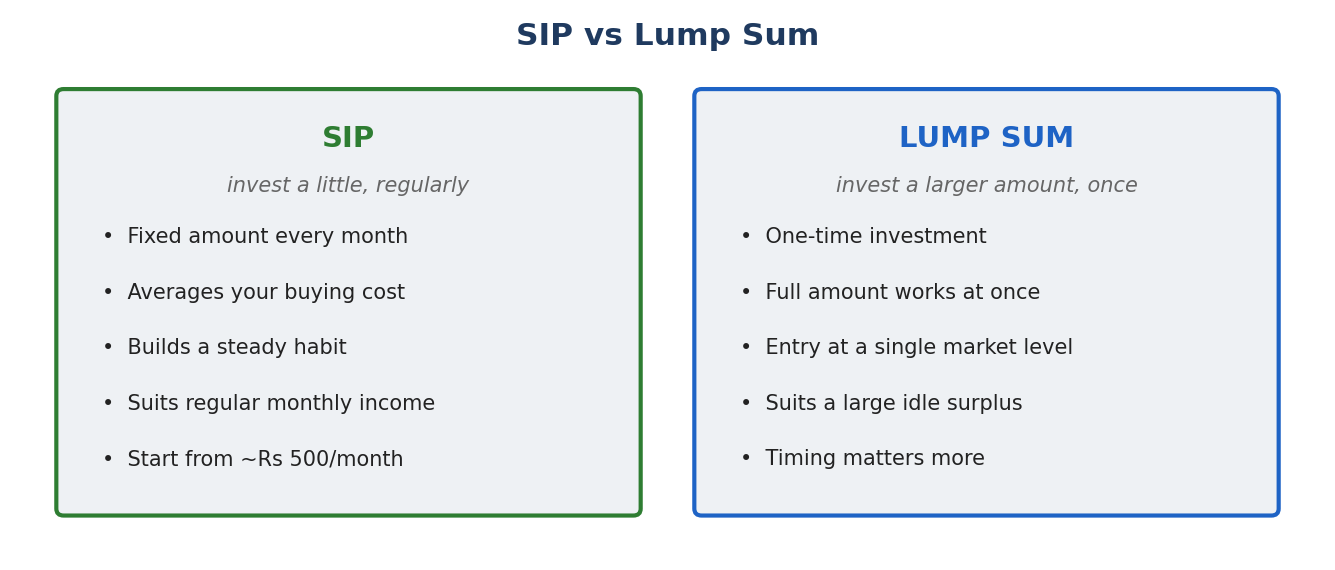
A Systematic Investment Plan (SIP) is a way of investing a fixed amount into a mutual fund at regular intervals — usually every month. Instead of investing ₹60,000 in one go, for example, you might invest ₹5,000 a month over a year.
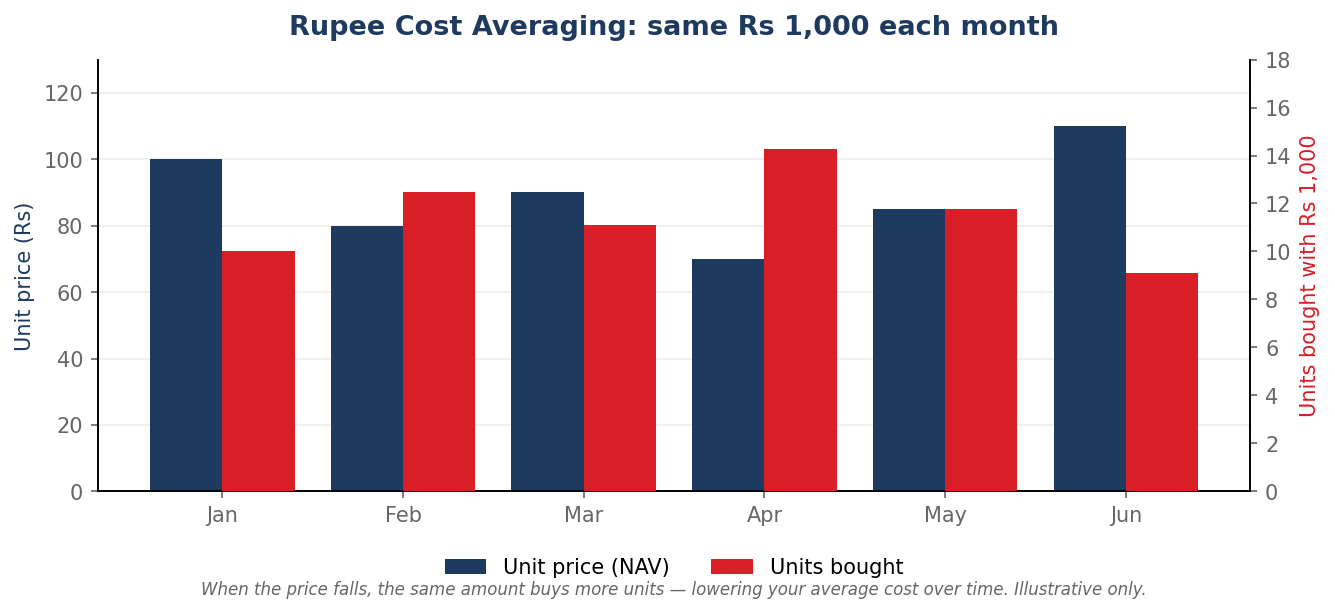
SIPs are built around discipline and rupee cost averaging. Because you invest the same amount each month regardless of the market, you automatically buy more units when prices are low and fewer when prices are high — which can smooth out your average purchase cost over time. Most SIPs in India can be started with as little as ₹500 a month, which makes them accessible to almost anyone with a regular income.
What is a Lump Sum Investment?
A lump sum investment means putting a larger amount into a mutual fund in one single transaction. People often choose this route when they have a sizeable amount of money ready to deploy — a bonus, maturity proceeds, the sale of an asset, or savings that have been sitting idle.
The appeal is straightforward: your full amount goes to work in the market immediately. The trade-off is that your entire investment is exposed to the market’s level on the day you invest, so timing plays a bigger role.
SIP vs Lump Sum — the Key Differences
| SIP | Lump Sum | |
|---|---|---|
| How you invest | Fixed amount, regularly (e.g. monthly) | One larger amount, at once |
| Best suited to | Regular monthly income | A large sum ready to invest |
| Market timing | Spreads it out — less dependent on timing | Fully exposed to the market on the day you invest |
| Cost averaging | Yes — averages your buying cost over time | No — single entry price |
| Discipline | Builds a regular saving habit | One-time decision |
Which One Fits You?
There’s no universally “right” answer — but a few simple pointers help:
A SIP tends to suit you if your money arrives in monthly slices (like a salary), you’re investing for a long-term goal, you want to build a regular habit, or you’d rather not worry about timing the market. Its steady, disciplined nature is why it’s so popular with first-time and long-term investors.
A lump sum tends to suit you if you already have a significant amount sitting idle, you have a longer horizon to ride out short-term ups and downs, and you’re comfortable with the fact that your entry point is a single moment in the market.
And it isn’t strictly either/or. Many investors do both — a steady monthly SIP for consistency, and an occasional lump sum when they have surplus funds to deploy. What matters more than the method is starting, staying invested through market cycles, and matching your fund choice to your goals and risk comfort.
A Note on Risk
Whichever route you choose, mutual fund returns are market-linked and not guaranteed — neither SIP nor lump sum removes that. What they change is how your money enters the market, not whether it carries risk. Choose the fund type (equity, debt or hybrid) that matches your risk tolerance and time horizon, and consider your goals before deciding how much and how often to invest.
Getting Started
Both SIPs and lump sum investments can be started online in minutes once you have a demat and trading account. You can explore mutual fund investing with TechTrade, and if you’re just beginning, you can open an account online and set up your first SIP or lump sum investment from there.
The Bottom Line
SIP and lump sum are simply two doors into the same room. A SIP spreads your investment out and builds discipline; a lump sum puts a larger amount to work at once. Match the method to how your money actually arrives and to your comfort with market timing — and remember that staying invested for the long term usually matters more than the route you take to get in.